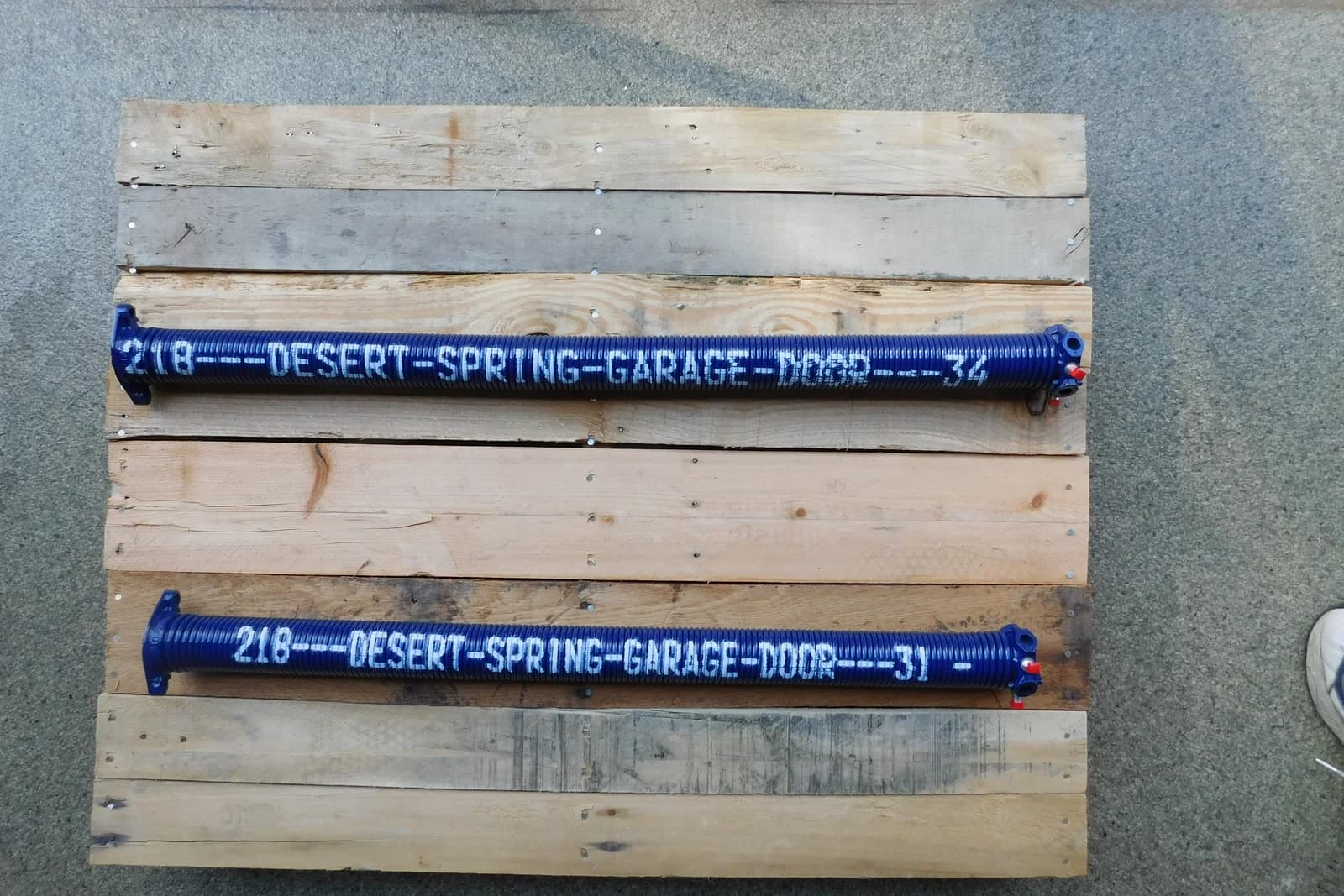
The spring is the part of your garage door that does the heavy lifting.
On a Wayne Dalton TorqueMaster system, that spring is hidden inside the torsion tube instead of mounted out in the open, so you rarely get much warning before it wears out or breaks.
When that happens, the door can go dead-weight and stop opening, and the fix is a TorqueMaster spring replacement.
This guide explains when TorqueMaster spring replacement is needed, what the job involves, and why many Phoenix homeowners use the opportunity to upgrade. For the full background on these systems, see our overview of how the Wayne Dalton TorqueMaster system works.
When TorqueMaster Spring Replacement Is Needed
Because the spring is sealed inside the tube, you usually notice the symptoms before you ever see the problem.
Signs that a TorqueMaster spring may need to be replaced include:
- A loud bang came from the garage, which is often a spring letting go
- The door feels extremely heavy when you try to lift it by hand
- The opener runs but the door only rises a few inches
- The door will not open at all, even though the opener has power
- The door moves unevenly or looks crooked as it travels
- You can see loose or hanging cables near the ends of the tube
If the door has already gone dead-weight, stop using the opener and have the system inspected. Our guide on what to do when a TorqueMaster spring is broken covers the safe first steps.
Why TorqueMaster Springs Wear Out
Every spring has a limited number of cycles in it.
One cycle is a single open and close, and the spring works a little each time.
Common reasons a TorqueMaster spring reaches the end of its life include:
- Normal wear from thousands of open and close cycles
- Age, as older springs gradually lose strength
- Rust or corrosion that weakens the metal
- A spring that was undersized for the weight of the door
- Years without inspection or maintenance
Because the TorqueMaster spring is hidden, that wear builds up out of sight until the spring finally gives out.
What Happens During TorqueMaster Spring Replacement
A proper spring replacement is more than swapping one part for another.
The whole system has to be checked and set up so the door is balanced and safe afterward.
A typical TorqueMaster spring replacement includes:
- Confirming the door uses a TorqueMaster system and weighing the door
- Safely releasing any stored tension in the system
- Removing the worn or broken spring and inspecting the cables, drums, and cones
- Selecting and installing the correct replacement spring for the door's weight
- Winding the spring to the exact turns the door needs
- Balancing the door and testing the opener and auto-reverse safety feature
The final testing matters. A balanced door moves smoothly and takes stress off the opener, which helps the whole system last longer.
TorqueMaster vs. TorqueMaster Plus Springs
There are two versions of the system, and which one you have affects the replacement.
The original TorqueMaster commonly uses a single spring inside the tube, while the TorqueMaster Plus commonly uses two springs to help balance the door more evenly.
On a TorqueMaster Plus, replacing the springs means working with two enclosed springs instead of one, and both should be matched to the door's weight.
Either way, the springs and winding parts are proprietary Wayne Dalton components, which is one reason these systems are slower and more specialized to service than a standard garage door.
Replace the TorqueMaster, or Convert to Standard Torsion?
When a TorqueMaster spring fails, you have two paths.
The first is to replace the spring with Wayne Dalton parts and keep the enclosed system.
The second is to convert the door to a standard exposed torsion spring system, which is the setup found on most garage doors.
Many homeowners choose to convert, especially if the system has already failed before, because a standard setup:
- Mounts the springs and hardware in the open, where they can be seen and serviced
- Uses widely available parts instead of proprietary sourcing
- Is quicker and simpler to repair in the future
- Can be fitted with high-cycle springs for a much longer service life
You can read more about that option on our TorqueMaster conversion service page.
High-Cycle Springs Last Longer in Arizona's Heat
Not all springs are rated for the same number of cycles.
A standard spring may be rated for a certain number of open and close cycles, while a high-cycle spring is built to last far longer.
Converting to a standard torsion system opens the door to high-cycle spring options, which can be a good fit for a busy household or a door that gets used several times a day.
Arizona's heat is also hard on garage door parts, so a longer-lasting spring can mean fewer surprises down the road.
Why TorqueMaster Spring Replacement Is Not a DIY Job
Garage door springs hold a large amount of stored energy, even when the door is closed.
A TorqueMaster adds difficulty because the spring, cables, and winding cone are enclosed inside the tube.
Trying to open or wind the system without the right tools and training can lead to serious injury or more damage to the door.
A trained technician can safely:
- Release the stored tension
- Remove the enclosed spring correctly
- Select the right replacement for your specific system
- Set the proper tension so the door is balanced
- Test the door and opener before leaving
This is a job to leave to someone trained to handle the tension safely.
Schedule TorqueMaster Spring Replacement in Phoenix
A worn or broken TorqueMaster spring can stop your garage door and make the whole system unsafe to use.
Desert Spring Garage Door Repair replaces TorqueMaster springs across Phoenix and the Valley, and can help you decide whether a straight replacement or a full conversion to standard torsion is the better long-term choice.
If your door feels heavy, moves unevenly, or will not open, do not keep forcing the opener.
Contact Desert Spring Garage Door Repair to schedule TorqueMaster spring replacement. Call or text (602) 694-3212.