
Local · Family · Trusted
Garage Door Spring Repair: Signs, Causes & How We Fix It
Your garage door springs do the heavy lifting every time your door opens and closes. Here’s how they work, the signs you need spring repair, and how we fix them — safely, and same-day in most cases.
Quality That Opens Every Time.
The Basics
What Are Garage Door Springs?
Most homeowners assume their garage door opener lifts the door. In reality, the springs do nearly all of the lifting.
Garage door springs are tightly wound pieces of steel designed to counterbalance the weight of your garage door. Without properly functioning springs, your opener would struggle to lift the door and could quickly become damaged.
How Your Garage Door System Works
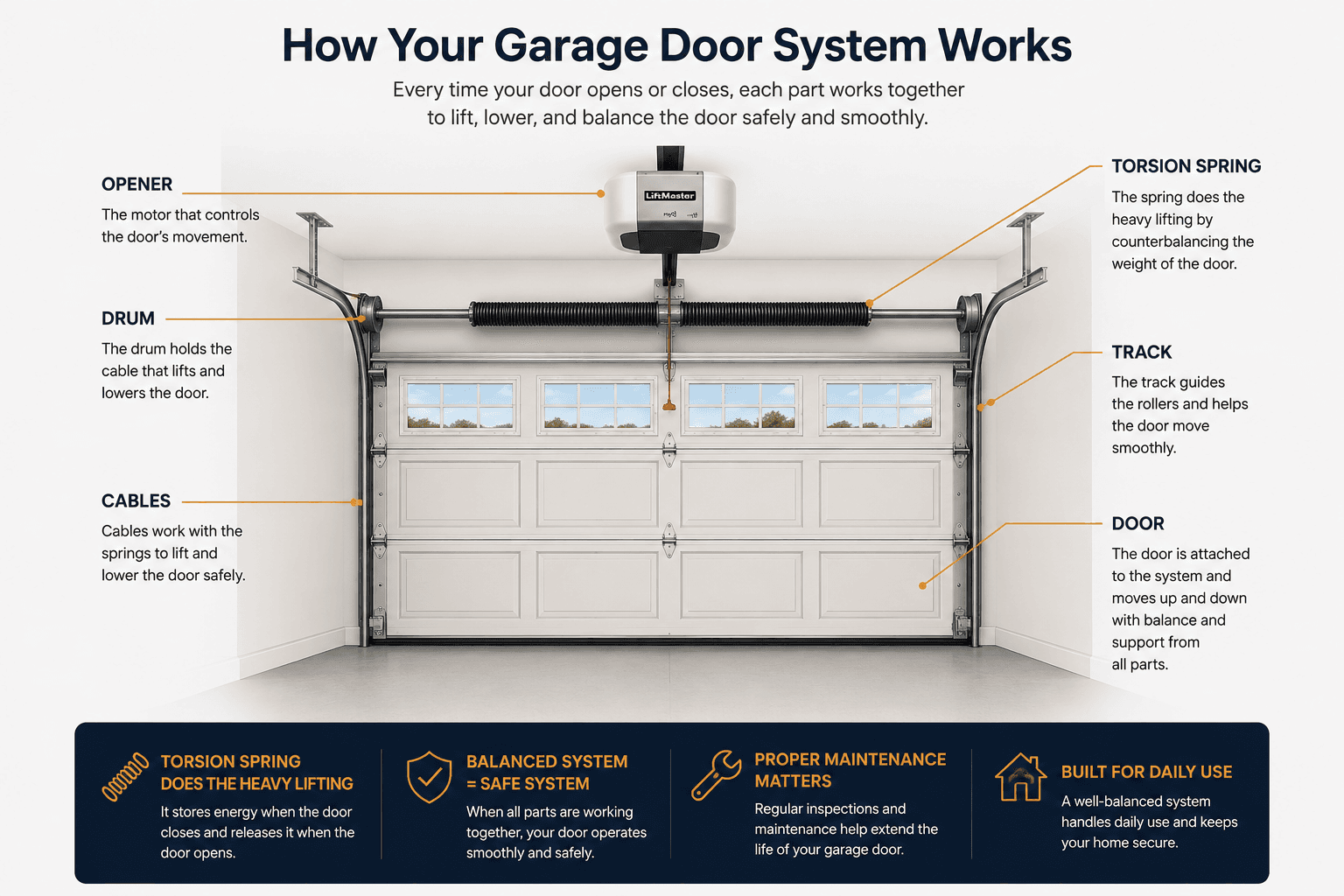
Tap a part of the diagram to see what it does
The Science, Simplified
How Do Garage Door Springs Work?
It comes down to storing and releasing energy — which is what makes a door weighing hundreds of pounds feel surprisingly light.
Door Closes
As the door comes down, the springs wind tight and store energy.
Door Opens
That stored energy releases to lift the door, doing the work so your opener doesn't have to.
Wear & Tear
Why Garage Door Springs Eventually Fail
Springs have a limited lifespan. Every time your garage door opens and closes, one cycle is used — and over time, metal fatigue causes springs to weaken and eventually break.
Daily Use
Every open and close uses one cycle. The springs simply wear with use.
Arizona Heat
Extreme heat and temperature swings accelerate metal fatigue and dry out lubrication.
Age
Like any moving part, springs weaken over the years until they finally give out.
Rust & Corrosion
Moisture and dust create rust that eats away at the steel and shortens spring life.
Improper Sizing
A spring that doesn't match the door's exact weight wears out far faster than it should.
Know the Warning Signs
Common Signs of a Broken Spring
Never attempt to repair a garage door spring yourself. Springs are under extreme tension and can be dangerous when handled improperly — it’s one job that’s genuinely best left to a trained technician.
Don’t Wait
Why Replacing Worn Springs Matters
Many homeowners think they can keep using the door after the springs begin wearing out — but that often creates bigger, costlier problems.
“Think of your garage door springs as the counterbalance system for the entire door. When they weaken, the opener has to compensate for the missing lifting power. Over time, that extra strain can significantly reduce the lifespan of your opener.”
The Door Gets Heavier
As the springs weaken, they stop counterbalancing the weight — so the door becomes harder to lift.
Your Opener Works Overtime
The opener has to make up for the lost lifting power, putting extra strain on the motor, gears, and rail system.
Premature Opener Failure
That constant strain can wear your opener out early — turning a simple spring repair into a far costlier opener replacement.
Faster Wear on Cables & Rollers
The added load accelerates wear on the cables and rollers throughout the door.
Stress on Hinges & Hardware
Hinges and hardware take on more stress than they were ever designed to handle.
Lost Balance & Safety Risks
The door falls out of balance, can get stuck or stop working entirely, and may pose safety concerns.
Replacing worn springs early can protect your entire garage door system — and save you money in the long run.
Spring Systems We Install
Standard Springs vs. Extended-Life Springs
Every garage door is different. We offer professionally sized spring systems designed to match your door, usage, and long-term goals.
How Long They Last — Rated Cycles
One cycle = one full open and close. Exact ratings depend on the spring system selected for your door.
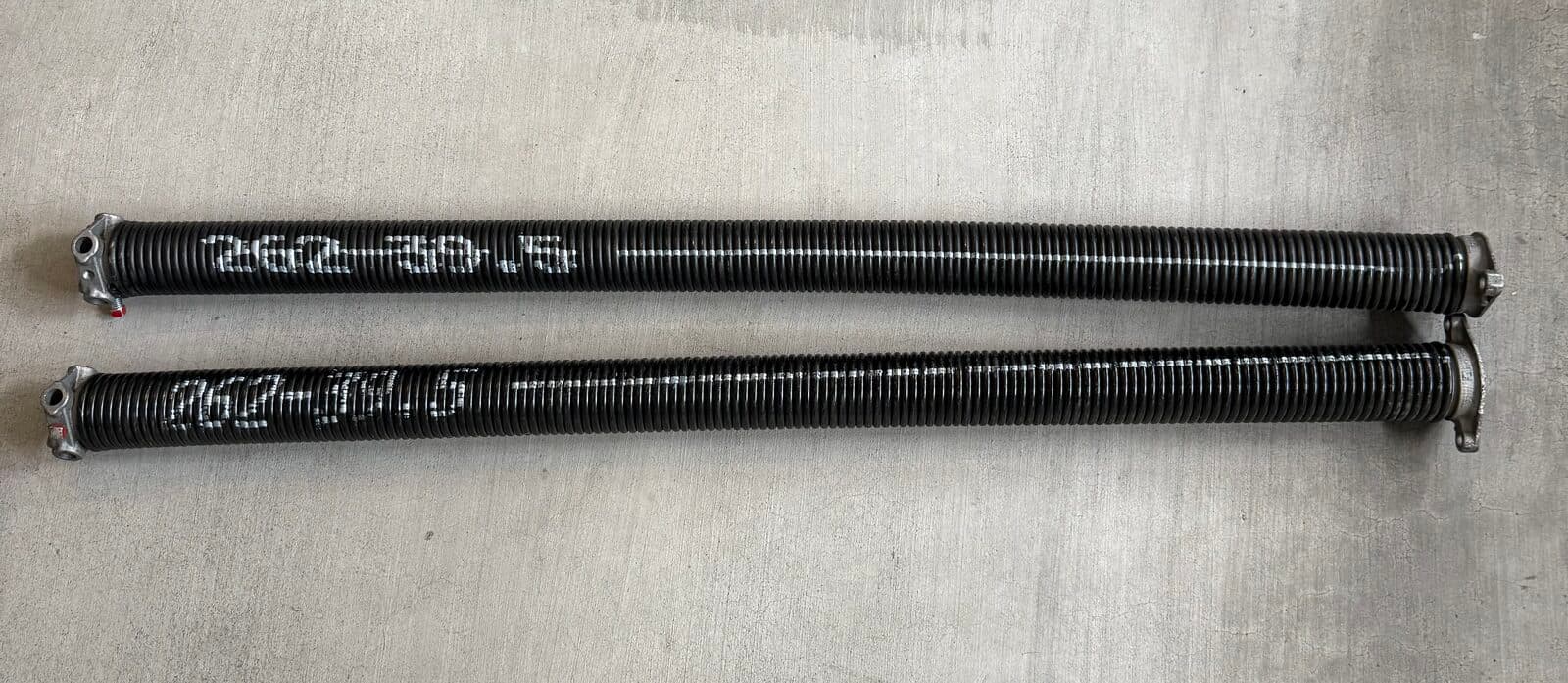
Standard Spring System
5-Year Warranty- Industry-standard cycle rating (approximately 10,000 cycles)
- Reliable everyday performance
- Lower upfront investment
- Great option for rental properties or lighter daily use
- More frequent replacement over the life of the home
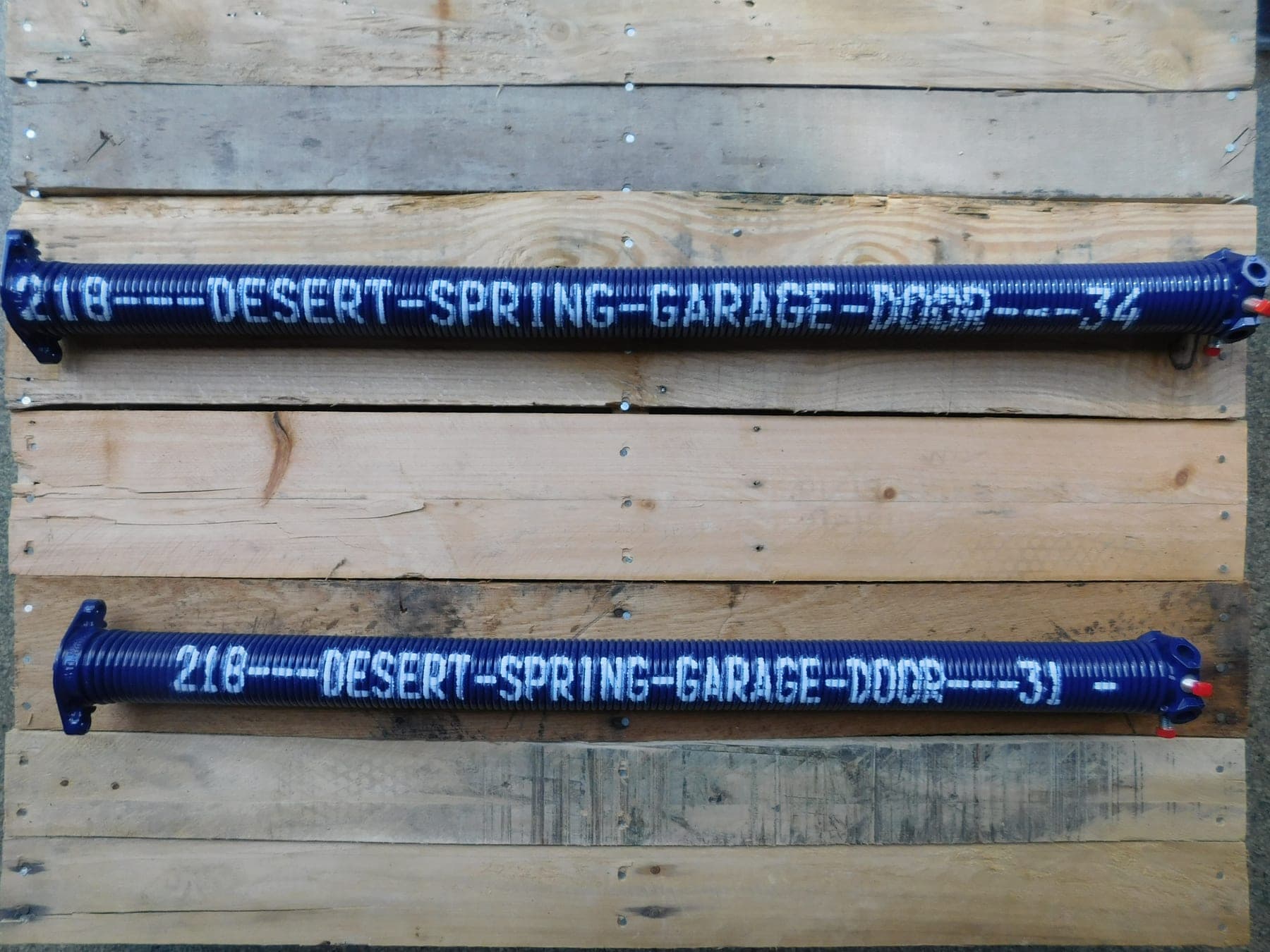
Extended-Life Spring System
Lifetime Warranty- High-cycle springs (30,000+ cycles)
- Significantly longer service life
- Better long-term value
- Fewer future replacements
- Ideal for homeowners planning to stay in their home
- Quieter, smoother operation over time
Our Recommendation
For most homeowners, we recommend our Extended-Life Spring System because it provides significantly longer service life, fewer future replacements, and better long-term value. While the upfront investment is higher, many homeowners save money over the life of their garage door by replacing their springs less often.
Not sure which spring system is right for your garage door?
We’ll inspect your door, explain your options, and recommend the best solution based on your home’s needs and your budget.
Done Safely, Done Right
Our Spring Replacement Process
- 1Complete safety inspection
- 2Verify door weight and balance
- 3Install properly sized springs
- 4Inspect cables and hardware
- 5Lubricate moving parts
- 6Test door balance and operation
- 7Final safety check
FAQ
Frequently Asked Questions
How long do garage door springs last?
Most standard springs are rated around 10,000 cycles — roughly 7–9 years of typical use. Arizona's heat can shorten that, while high-cycle Extended-Life springs are built to last considerably longer.
Can I replace only one spring?
You can, but on a two-spring door we usually recommend replacing both. They wear at the same rate, so if one broke the other is likely close behind — doing both in one visit saves a second service call and keeps the door balanced.
How much does spring replacement cost?
It depends on the type and size of spring your door needs. We provide free, up-front estimates so you know the exact price before any work begins — no surprises and no pressure.
Can I open my garage door with a broken spring?
It's not recommended. With a broken spring, the full weight of the door (often 150+ lbs) falls on the opener and cables, which can fail or cause injury. Stop using the door and the opener and give us a call.
Are lifetime / Extended-Life springs worth it?
For homeowners who use their garage daily or plan to stay in their home long-term, usually yes — high-cycle springs last much longer and mean fewer future breakdowns. We'll help you weigh it for your situation.
How do I know if my spring is broken?
Common signs include a loud bang from the garage, a door that feels very heavy or won't lift, a door that opens only a few inches, an opener that strains, or a visible gap in the coiled spring.
Serving the Valley
Garage Door Spring Replacement Throughout the Valley
Desert Spring provides professional garage door spring replacement to homeowners across Phoenix, Scottsdale, Paradise Valley, Fountain Hills, Cave Creek, Peoria, Glendale, Surprise, Mesa, Chandler, and Gilbert— a local, family-owned team that knows what Arizona’s heat does to garage door springs.
Think Your Spring May Be Broken?
Our local, family-owned team provides professional garage door spring replacement throughout the Valley.