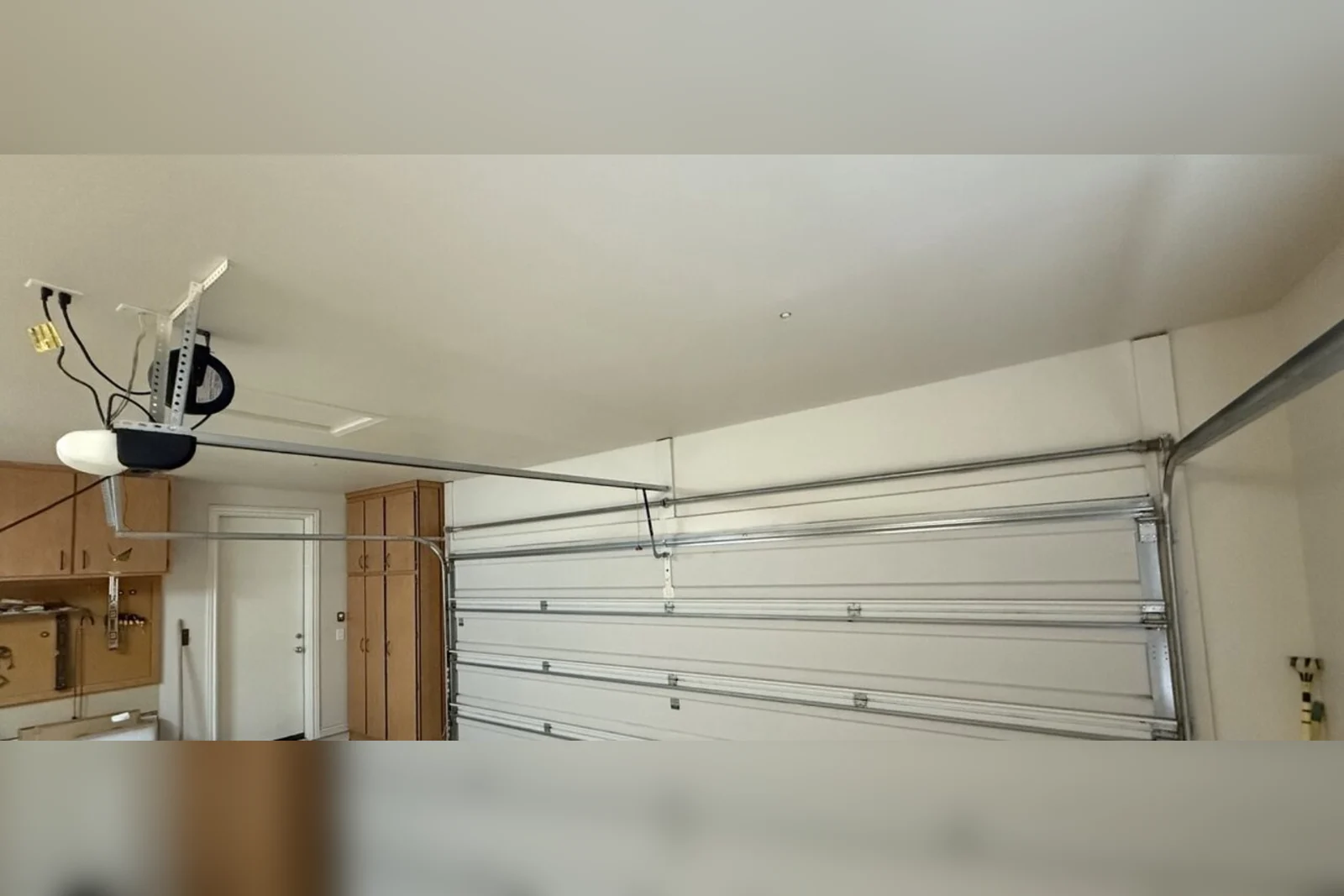
If your garage door has a smooth tube across the top instead of visible springs, you may have a Wayne Dalton TorqueMaster system.
There are two main versions of it, and the newer one is called the TorqueMaster Plus.
Many Arizona homes were built with a TorqueMaster Plus system because it has a clean look and keeps the springs tucked out of sight.
But like any garage door counterbalance, it can wear out, and because the springs are hidden inside the tube, the problems are not always easy to see.
This guide explains how the Wayne Dalton TorqueMaster Plus system works, how it differs from the original TorqueMaster, the problems it tends to develop, and what your options are. For the broader overview, you can also read about how the Wayne Dalton TorqueMaster system works.
What Is the Wayne Dalton TorqueMaster Plus System?
The TorqueMaster Plus is Wayne Dalton's updated version of its enclosed counterbalance system.
Like the original TorqueMaster, it hides the spring system inside the torsion tube rather than mounting it out in the open.
The main difference is that a TorqueMaster Plus commonly uses two springs, one toward each end of the tube, to help balance the door more evenly.
The cables that lift the door are wound onto drums at the ends, and the springs are wound to the right tension when the system is installed.
From the outside, all you usually see is a clean metal tube running across the top of the door, with no exposed springs.
That tidy look is part of why the system was popular, but it also means the working parts are sealed away where they are harder to inspect.
How the TorqueMaster Plus System Works
Every garage door needs a counterbalance so the door is not lifted by brute force alone.
A garage door is heavy, and the opener is only meant to guide it, not carry its full weight.
On a TorqueMaster Plus, the two enclosed springs store tension and do most of the lifting.
When the system is healthy, the door should:
- Feel balanced when you lift it by hand
- Open and close smoothly
- Stay in place when stopped partway
- Move evenly on both sides
- Let the opener work without straining
The two-spring design is meant to share the load and keep the door balanced across its width.
When one spring weakens or breaks, that balance is lost, and the door can start to bind, feel heavy, or move unevenly.
Because everything is sealed inside the tube, the first thing most homeowners notice is a symptom, not the broken part itself.
How the TorqueMaster Plus Differs From the Original TorqueMaster
Both systems are enclosed, but there are a few practical differences worth knowing.
- The original TorqueMaster often uses a single spring, while the TorqueMaster Plus commonly uses two
- The two-spring design aims to balance the door more evenly across its width
- Both hide the springs and cables inside the torsion tube
- Both rely on proprietary Wayne Dalton parts rather than standard hardware
- Both can be harder to inspect and service than a standard exposed torsion system
The takeaway is that the TorqueMaster Plus is a refinement of the same enclosed idea, not a completely different concept.
It still keeps the springs sealed inside the tube, which is the feature that makes these systems both clean-looking and harder to service.
Common TorqueMaster Plus Problems
A TorqueMaster Plus can work well for years, but the springs and cables still wear out over time.
Common problems include:
- A broken spring hidden inside the tube
- The door becoming heavy or unbalanced when one spring fails
- Frayed or loose cables sealed inside the system
- Worn or cracked plastic winding cones
- Hard-to-source proprietary TorqueMaster Plus parts
- The door going dead-weight and refusing to open
Because the system uses two springs, it is possible for one to fail while the other still carries some load.
That can make the door feel heavy or uneven rather than completely stuck, which sometimes masks the real cause for a while.
Either way, a hidden spring problem does not get better on its own, and the extra strain can carry over to the opener.
Signs Your TorqueMaster Plus Needs Service
Since you cannot see the springs, it helps to know the warning signs.
Have your TorqueMaster Plus inspected if you notice:
- A loud bang from the garage, which can be a spring letting go
- The door feels heavy or uneven when you lift it by hand
- The opener strains, pauses, or struggles to lift the door
- The door opens part way and stops
- The door moves unevenly or looks crooked as it travels
- Loose or hanging cables near the ends of the tube
If the door will not open at all and feels extremely heavy, stop using the opener.
Forcing it against a dead-weight door can strain the motor and gears.
If you suspect a broken spring, our guide on what to do when a TorqueMaster spring is broken walks through the safe next steps.
Repairing or Converting a TorqueMaster Plus
When a TorqueMaster Plus develops a problem, you generally have two paths.
The first is to repair it using Wayne Dalton parts, replacing the worn spring, cables, or cones inside the tube.
The second is to convert the door to a standard exposed torsion system, which is the setup found on most garage doors.
Many homeowners choose to convert, especially if the system has already failed before, because a standard setup:
- Mounts the springs and hardware out in the open, where they can be seen and serviced
- Uses widely available parts instead of proprietary ones
- Is quicker and simpler to repair in the future
- Can be fitted with high-cycle springs built to last longer in Arizona's heat
You can read more about that option on our TorqueMaster conversion service page.
A technician can look at your specific door and help you decide whether a repair or a conversion makes more sense.
Why TorqueMaster Plus Service Should Be Left to a Professional
Garage door springs hold a large amount of stored energy, even when the door is closed.
A TorqueMaster Plus adds difficulty because the springs, cables, and winding cones are sealed inside the tube and use proprietary parts.
Trying to open or adjust the system without the right tools and training can lead to serious injury or more damage to the door.
A trained technician can:
- Release the stored tension safely
- Work with the enclosed TorqueMaster Plus components correctly
- Select the right parts for your specific system
- Set the proper spring tension so the door is balanced
- Test the door and opener before leaving
This is not a do-it-yourself job.
The safest and most reliable path is to have a professional handle the system from start to finish.
TorqueMaster Plus Service in Phoenix and the Valley
The Wayne Dalton TorqueMaster Plus is a common system in Arizona homes, and it can serve a door well for years.
But when one of its hidden springs weakens or breaks, the door can become heavy, uneven, or stuck, and the sealed design makes it harder to service than a standard setup.
Desert Spring Garage Door Repair works on TorqueMaster and TorqueMaster Plus systems across Phoenix and the Valley.
We can inspect your door, explain what is happening inside the tube, and help you decide whether a repair or a full conversion to standard torsion is the right call.
If your garage door has a smooth tube across the top, feels heavy, or moves unevenly, do not keep forcing the opener.
Contact Desert Spring Garage Door Repair to schedule service for your TorqueMaster Plus system. Call or text (602) 694-3212.