
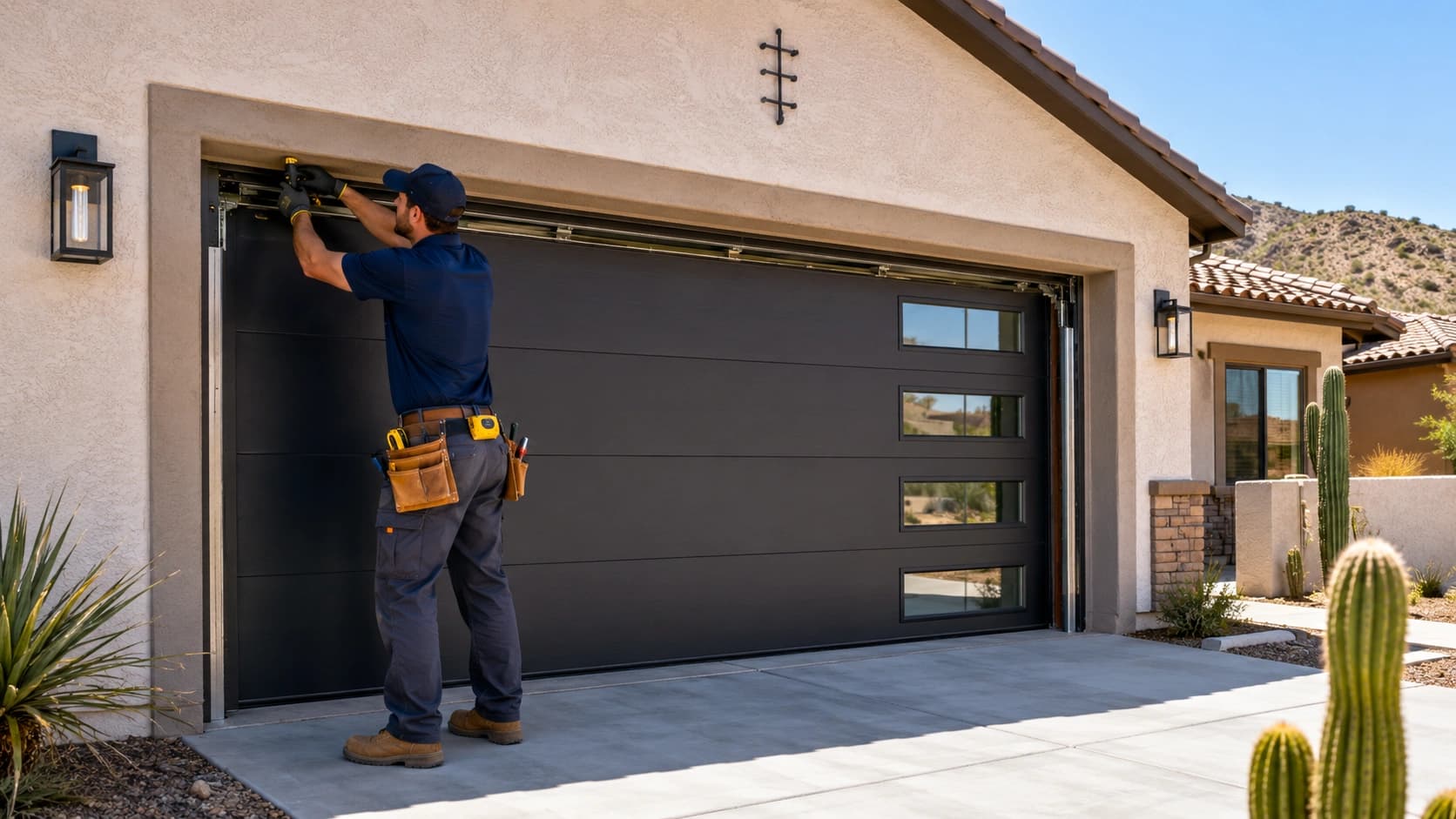
A new garage door can completely change the way your home looks and works. It can improve curb appeal, make your garage safer, and help protect your belongings from the Arizona heat. Still, many homeowners are unsure what happens during a professional garage door installation.
Will the project take all day? Do you need to move everything out of the garage? What happens to the old door? These are common questions, and knowing the answers can make the process feel much easier.
Here is what you can expect when you hire Desert Spring Garage Door Repair to install your new garage door.
1. Choosing the Right Garage Door for Your Home
The first step is selecting a garage door that fits your home, budget, and daily needs. Garage doors come in many styles, materials, colors, and insulation levels. A professional installer can help you compare your options without making the process confusing.
You may want a classic raised-panel door, a clean modern design, or a carriage-style door with decorative hardware. You will also need to decide whether insulation is important. In Arizona, an insulated garage door may help keep hot outdoor air from quickly entering the garage.
During the planning stage, the installer will measure the garage opening and check the surrounding space. Accurate measurements are important because even a small mistake can affect how well the door opens, closes, and seals.
Your installer may also look at your current garage door opener, tracks, springs, and hardware to determine what can stay and what should be replaced.
Things to Consider Before Choosing a Door
Before scheduling your garage door installation, think about:
- The style and color that match your home
- Whether you want windows in the garage door
- The level of insulation you need
- Your budget for the full project
- The amount of maintenance the material requires
- Whether your current opener can handle the new door
- Any community or HOA design rules
A professional can walk you through each choice and help you select a door that looks good and works well for years.
2. Preparing Your Garage for Installation Day
Before the installation team arrives, you should clear enough space for them to work safely. You do not need to empty the entire garage, but the area around the door should be open.
Move vehicles out of the garage and park them away from the driveway. Remove bikes, tools, storage boxes, lawn equipment, and other items near the garage door tracks. Installers need room to remove the old door, carry in new panels, and set up ladders and tools.
You should also keep children and pets away from the work area. Garage doors are heavy, and the springs are under a great deal of tension. The installation area should remain clear until the project is complete.
If your garage door opener is being replaced, the installer may need access to a nearby electrical outlet. Make sure the outlet and ceiling area are easy to reach.
Most professional installations can be completed within several hours. However, the total time can depend on the size of the door, the condition of the opening, and whether new tracks, springs, or an opener are being installed.
3. Removing the Old Garage Door
Once the work area is ready, the installation team will begin removing the existing garage door. This process must be handled carefully because the door panels are heavy, and the spring system can be dangerous.
The installer will first release the spring tension using professional tools. Homeowners should never try to remove or adjust garage door springs themselves. A spring can cause serious injury if it snaps or releases unexpectedly.
After the springs are secured, the installer will disconnect the garage door opener and remove the old door panels one at a time. The tracks, rollers, cables, brackets, and other hardware may also be removed if they are not compatible with the new door.
The garage opening will then be inspected for damage or uneven areas. If there are problems with the framing, floor, or mounting points, the installer will explain what needs to be corrected before moving forward.
A professional installation company will usually remove the old door and clean up the work area. Ask about disposal during your estimate so you know whether it is included in the service.
4. Installing and Testing the New Garage Door
The new tracks and hardware are installed first. Each part must be properly lined up so the door can move smoothly without shaking, scraping, or becoming uneven.
Next, the new garage door panels are placed into position. The panels are connected with hinges, and rollers are inserted into the tracks. Once the door is assembled, the spring system and cables are installed.
The spring system is one of the most important parts of the garage door. It supports the door’s weight and makes it possible to open and close the door safely. The springs must be correctly sized and balanced for the new door.
If a garage door opener is included in the project, it will be installed or connected after the door is properly balanced. The installer will then program the remotes, keypad, and safety features.
Final Safety and Performance Checks
Before the installation is finished, the technician should check:
- Whether the door opens and closes smoothly
- Whether the door stays balanced when partly open
- Whether the tracks and rollers are properly aligned
- Whether the springs and cables have the correct tension
- Whether the photo-eye sensors stop the door when blocked
- Whether the automatic reverse feature works correctly
- Whether the weather seal closes gaps around the door
- Whether the opener, remotes, and keypad respond properly
The installer may make several small adjustments during testing. These final steps help prevent early wear and make sure the door is safe for daily use.
5. Learning How to Care for Your New Garage Door
After the garage door installation is complete, the installer should show you how to operate the door and explain its basic maintenance needs.
You may receive instructions for cleaning the panels, lubricating moving parts, testing the safety sensors, and checking the weather seal. You should also learn how to use the opener’s emergency release in case the power goes out.
Avoid placing tools, boxes, or other objects near the tracks or sensors. Check the door regularly for unusual sounds, loose hardware, frayed cables, or uneven movement. Small problems are often easier and less expensive to fix when they are found early.
A professional inspection once a year can also help keep the door running safely. During an inspection, a technician can check the springs, rollers, cables, hinges, opener, and safety system.
Schedule Your Garage Door Installation Today
A professional garage door installation should be organized, safe, and easy to understand. From choosing the right door to testing the final safety features, every step plays a role in how well your new garage door performs.
Desert Spring Garage Door Repair can help you select and install a garage door that fits your home, style, and budget. Our team handles the heavy work, careful adjustments, and safety testing so you can enjoy a dependable garage door without the stress.
Ready to improve your home with a new garage door? Contact Desert Spring Garage Door Repair today to request an estimate and schedule your installation.